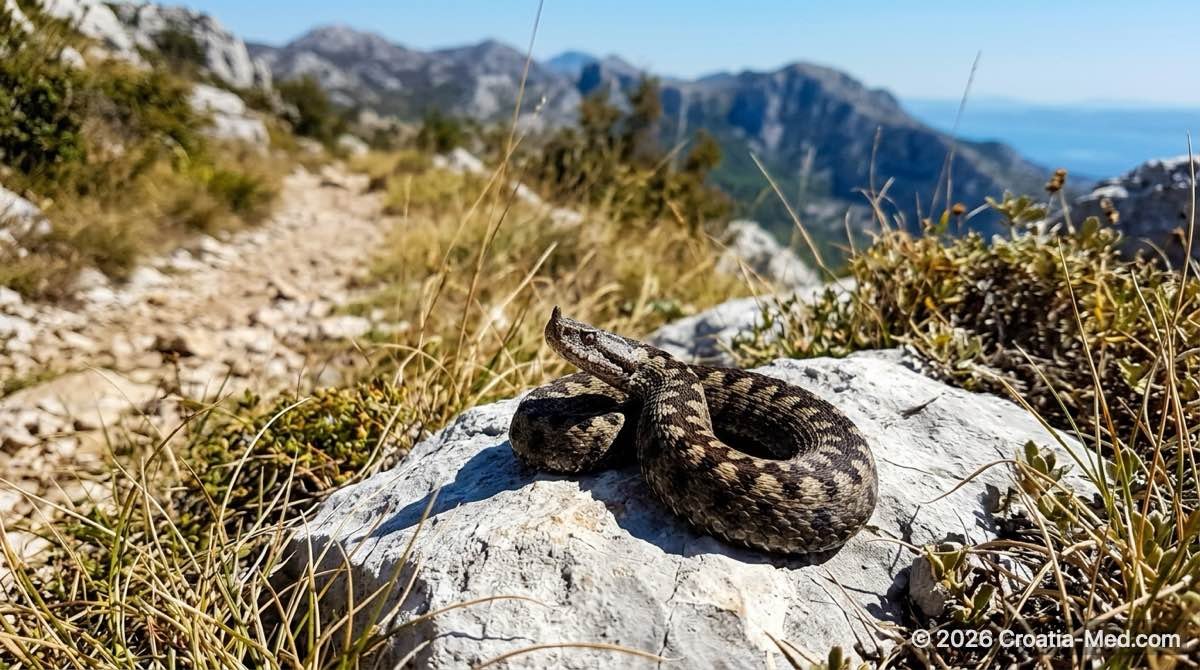
- Vipera ammodytes – i più pericolosi e i più rilevanti dal punto di vista clinico
- Vipera berus
- Vipera ursinii (rara)Tra queste, Vipera ammodytes è responsabile della maggior parte degli avvelenamenti clinicamente significativi.
Cosa succede dopo un morso di serpente?
Il veleno di vipera è principalmente emotossico e citotossico, cioè colpisce i vasi sanguigni e i tessuti circostanti.
Dopo l'avvelenamento, avvengono diversi processi:
Aumento della permeabilità vascolare – il liquido perde nei tessuti
Attivazione dei mediatori infiammatori
Possibile interruzione delle vie di coagulazione
Il risultato è una combinazione di danni locali ai tessuti ed effetti sistemici.
Effetti locali dell'avvelenamento
I primi sintomi di solito compaiono nel sito del morso:
- Dolore immediato
- Gonfiore (edema) che può diffondersi
- Rosso e calore
- In alcuni casi, vesciche o necrosi
Questi cambiamenti sono dovuti all'infiammazione e agli effetti tossici diretti del veleno sui tessuti.
Sintomi sistemici dell'avvelenamento
Nei casi da moderati a gravi, il veleno entra in circolazione e causa:
- Nausea e vomito
- Vertigini o debolezza
- Ipotensione (pressione bassa)
- Anomalie della coagulazione (tendenza al sanguinamento)
- In rare ma gravi situazioni:
- Shock
- Disfunzione degli organi
Cosa fare dopo un morso di serpente
Il primo soccorso immediato è fondamentale:
- Rimani calmo e limita i movimenti
- Immobilizza l'arto colpito
- Togli anelli, orologi o indumenti aderenti
- Cerca subito assistenza medica
Evitare:
- Tagliare la ferita
- Tentare di succhiare veleno
- Applicazione di un laccio emostatico
Trattamento medico
In un contesto ospedaliero, la gestione può includere:
- Monitoraggio dei parametri vitali
- Fluidi endovenosi
- Controllo del dolore
- Monitoraggio di laboratorio (soprattutto della coagulazione)
- Somministrazione di antiveleno nei casi indicati
I morsi di serpente in Croazia sono rari ma di rilevanza medica. Il veleno di vipera colpisce principalmente i vasi sanguigni e i tessuti, causando infiammazione locale e, in alcuni casi, complicazioni sistemiche. Il riconoscimento tempestivo e le cure mediche appropriate sono fondamentali per un buon risultato.
Contatti di emergenza in Croazia:
Contatto d'emergenza per morsi di serpente in Croazia
- Emergenza Generale 112
- Servizio Medico di Emergenza 194
- Centro Antivelenamento (Zagabria) +385 1 2348 342
! IMPORTANTE:
Disclaimer: Queste informazioni sono solo a scopo educativo e non sostituiscono il parere medico professionale. In caso di morso di serpente, si tratta di un'emergenza critica: contattare immediatamente i servizi di emergenza (112 o 194).
Riferimenti:
*Acta Clin Croat. 2022
*sciencedirect

Verified by: DR. Dr. med. Wilson Allakaj — Physician — Emergency medicine (Umag), Verified on May 16, 2026