How to Stay Safe in the Mediterranean Summer
Traveling to Croatia during the summer offers beautiful coastlines, clear water, and many outdoor activities. However, Croatia’s Mediterranean climate is also associated with high levels of ultraviolet (UV) radiation, particularly between late spring and early autumn. Understanding how to protect yourself from excessive sun exposure is essential to reduce health risks while enjoying your stay.
International and national health authorities emphasize that excessive UV exposure is a major risk factor for sunburn, premature skin aging, eye damage, and skin cancer. Proper sun protection is therefore a key component of travel health in sunny regions.
1. UV Radiation and Health Risks
Ultraviolet radiation is part of natural sunlight and cannot be seen or felt directly. According to the World Health Organization, overexposure to UV radiation can cause both acute and long-term health effects. Acute effects include sunburn and eye irritation, while long-term exposure increases the risk of skin cancers, cataracts, and immune system suppression.
The WHO highlights that UV radiation levels are highest around midday, when the sun is at its peak. In Mediterranean countries such as Croatia, UV intensity during summer is often classified as high to very high.
2. Best Time to Be in the Sun and When to Avoid It
Health authorities consistently recommend avoiding direct sun exposure during peak UV hours.
According to the WHO and European radiation protection agencies:
- Peak UV period: approximately 11:00 a.m. to 4:00 p.m.
- Safer times outdoors: early morning and late afternoon
During peak hours, UV radiation reaches levels that can damage the skin within a short time, even without visible heat. The WHO stresses that cloud cover does not fully block UV radiation, meaning protection is still required on partially cloudy days.
Planning swimming, sightseeing, and outdoor activities outside peak UV hours significantly reduces health risks.
3. UV Index as a Planning Tool
The UV Index is an internationally standardized measure used to indicate the strength of UV radiation at a specific place and time.
According to the WHO:
- UV Index 3 or higher: sun protection is recommended
- UV Index 8 or higher: unprotected skin can burn quickly
In Croatia, UV Index values frequently exceed 7–9 during summer, particularly near the coast. Travelers are encouraged to check daily UV forecasts through official meteorological services and adapt their behavior accordingly.
4. Skin Types and Sun Sensitivity
Not all skin reacts to sunlight in the same way. The German Federal Office for Radiation Protection classifies skin sensitivity into several phototypes:
- Skin Type I: very fair skin, always burns, never tans
- Skin Type II: fair skin, burns easily, tans slightly
- Skin Type III: medium skin, sometimes burns, tans gradually
- Skin Type IV: darker or olive skin, rarely burns
People with lighter skin types (I–II) are at particularly high risk of sunburn and long-term UV damage. However, the BfS emphasizes that all skin types require sun protection, as UV radiation can damage deeper skin layers regardless of tanning ability.
5. Sunscreen: Correct Selection and Use
Sunscreen is a core element of sun protection strategies recommended by official health authorities.
According to WHO and European public health guidance:
- Use broad-spectrum sunscreen (UVA and UVB protection)
- Choose SPF 30 or higher; SPF 50+ is recommended for fair skin or prolonged exposure
- Apply sunscreen before sun exposure
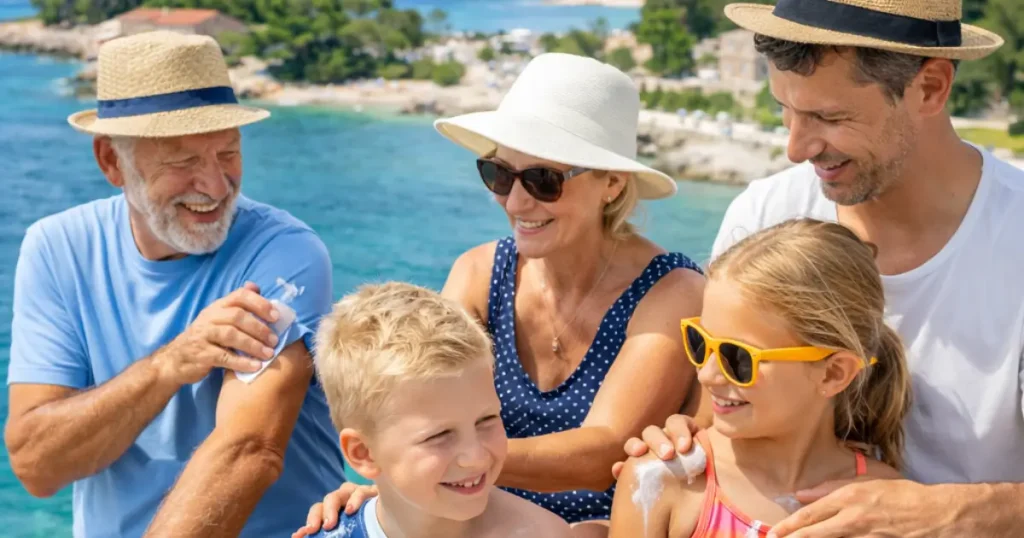
- Reapply every two hours, and after swimming or heavy sweating
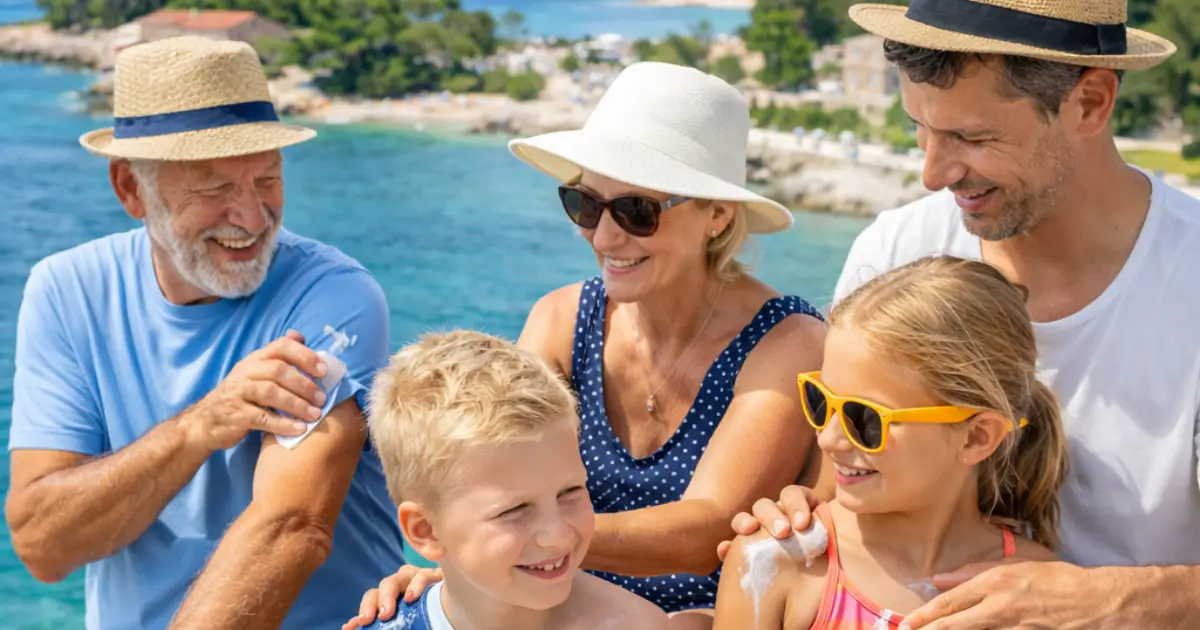
The WHO notes that sunscreen should never be the only protective measure, but rather combined with clothing, shade, and behavioral strategies.
6. Protective Clothing, Hats, and Sunglasses
Health authorities emphasize that physical barriers provide highly effective UV protection.
Recommended measures include:
- Wearing long-sleeved, tightly woven clothing
- Using wide-brimmed hats to protect face, ears, and neck
- Wearing sunglasses with certified UV protection
The WHO and European radiation agencies highlight that eye protection is essential, as UV radiation contributes to long-term eye damage, including cataracts.
7. Shade and Behavioral Protection
Seeking shade is strongly recommended during peak UV hours. However, official guidance warns that shade does not completely eliminate UV exposure, as UV rays are reflected by surfaces such as water, sand, and stone.
Therefore, shade should be combined with:
- Sunscreen
- Protective clothing
- Limited time in direct sunlight
This is particularly important at beaches and near water, which are common environments during summer travel in Croatia.
8. Sun Exposure During Water Activitie
Swimming and water sports increase UV exposure due to reflection from the water surface. According to WHO guidance:
- UV radiation is intensified near water
- Cooling effects of water can mask sunburn development
Travelers should apply water-resistant sunscreen and reapply it frequently when engaging in swimming or boating activities.
9. Children, Elderly People, and High-Risk Group
The WHO identifies children, older adults, and individuals with fair skin or a history of skin cancer as high-risk groups.
Special precautions include:
- Keeping infants out of direct sunlight
- Using protective clothing rather than sunscreen alone for children
- Limiting exposure duration for older adults
Protecting vulnerable groups is a key public health priority emphasized by international health organizations.
10. Key Sun Protection Recommendations for Croatia
- Avoid sun exposure between 11:00 and 16:00
- Check the daily UV Index
- Use SPF 30–50+ sunscreen
- Wear protective clothing, hats, and UV-blocking sunglasses
- Seek shade whenever possible
- Adjust protection according to skin type
Following these evidence-based recommendations allows travelers to enjoy Croatia’s summer climate while minimizing health risks.
Source:
World Health Organization – Radiation: Protecting against skin cancer
World Health Organization – Ultraviolet radiation and health
German Federal Office for Radiation Protection (Bundesamt für Strahlenschutz) – Skin types and UV sensitivity
Swiss Federal Office of Public Health – Sun and UV radiation
U.S. Centers for Disease Control and Prevention – Sun safety