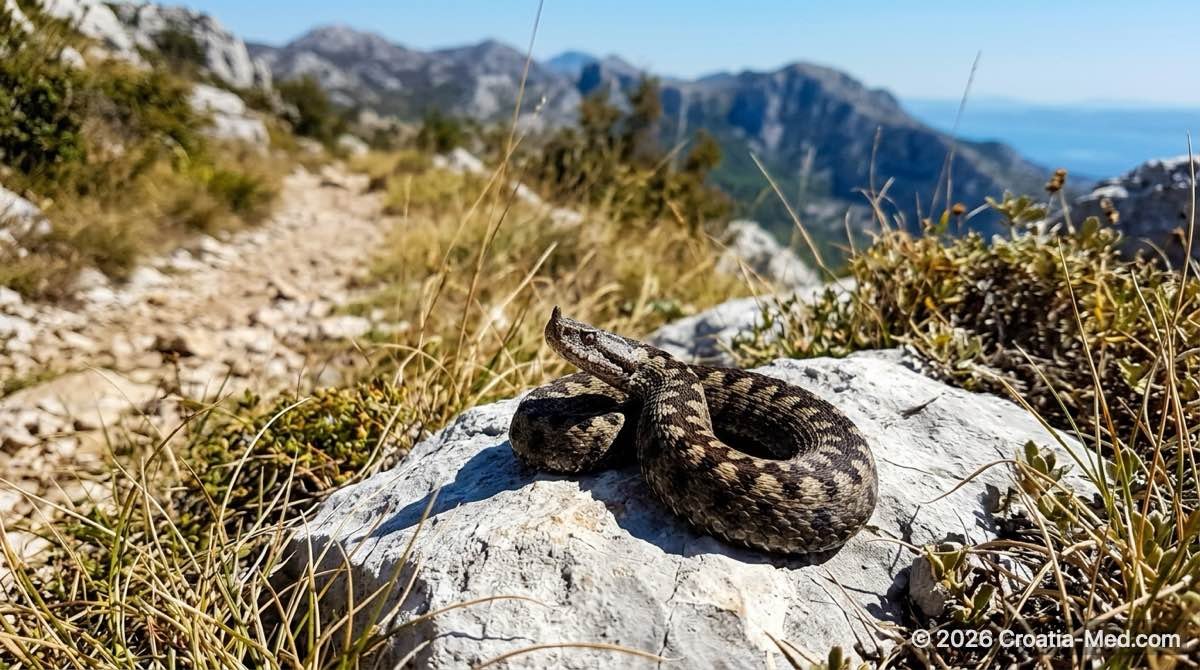
- Vipera ammodytes – najopasnija i klinički najvažnija
- Vipera berus
- Vipera ursinii (rijetka)Među njima, Vipera ammodytes odgovorna je za većinu klinički značajnih otrova.
Što se događa nakon ugriza zmije?
Otrov zmije je prvenstveno hemotoksičan i citototosičan, što znači da utječe na krvne žile i okolna tkiva.
Nakon otrova odvija se nekoliko procesa:
Povećana vaskularna propusnost – tekućina curi u tkiva
Aktivacija upalnih medijatora
Mogući poremećaj koagulacijskih putova
Rezultat je kombinacija lokalnog oštećenja tkiva i sistemskih učinaka.
Lokalni učinci otrova
Prvi simptomi obično se pojavljuju na mjestu ugriza:
- Trenutna bol
- Oteklina (edem) koja se može širiti
- Crvenilo i toplina
- U nekim slučajevima, mjehurići ili nekroza
Te su promjene posljedica upale i izravnih toksičnih učinaka otrova na tkiva.
Sistemski simptomi otrova
U umjerenim do teškim slučajevima, otrov ulazi u cirkulaciju i uzrokuje:
- Mučnina i povraćanje
- Vrtoglavica ili slabost
- Hipotenzija (nizak krvni tlak)
- Abnormalnosti zgrušavanja (sklonost krvarenju)
- U rijetkim, ali ozbiljnim situacijama:
- Šok
- Disfunkcija organa
Što učiniti nakon ugriza zmije
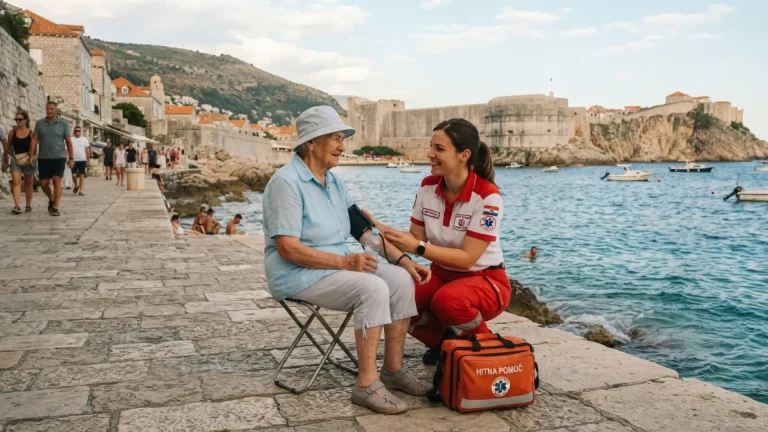
Hitna prva pomoć je ključna:
- Ostanite smireni i ograničite kretanje
- Imobilizirajte zahvaćeni ud
- Uklonite prstenje, satove ili usku odjeću
- Odmah potražite liječničku pomoć
Izbjegavajte:
- Rezanje rane
- Pokušaj usisavanja otrova
- Primjena podveza
Medicinsko liječenje
U bolničkom okruženju, upravljanje može uključivati:
- Praćenje vitalnih znakova
- Intravenske tekućine
- Kontrola boli
- Laboratorijsko praćenje (posebno koagulacija)
- Primjena protuotrova u indiciranim slučajevima
Ugrizi zmija u Hrvatskoj su rijetki, ali medicinski značajni. Otrov zmije prvenstveno pogađa krvne žile i tkiva, što dovodi do lokalne upale i, u nekim slučajevima, do sistemskih komplikacija. Brzo prepoznavanje i odgovarajuća medicinska skrb ključni su za dobar ishod.
Hitni kontakti u Hrvatskoj:
Hitni kontakt za ugrize zmija u Hrvatskoj
- Opća hitna situacija 112
- Hitna medicinska služba 194
- Centar za kontrolu otrova (Zagreb) +385 1 2348 342
! VAŽNO:
Odricanje od odgovornosti: Ove informacije služe isključivo u edukativne svrhe i ne zamjenjuju profesionalni medicinski savjet. U slučaju ugriza zmije, radi se o kritičnoj hitnosti: odmah kontaktirajte hitne službe (112 ili 194).
Reference:
*Acta Clin Croat. 2022
*sciencedirect

Verified by: DR. Dr. med. Wilson Allakaj — Physician — Emergency medicine (Umag), Verified on May 16, 2026