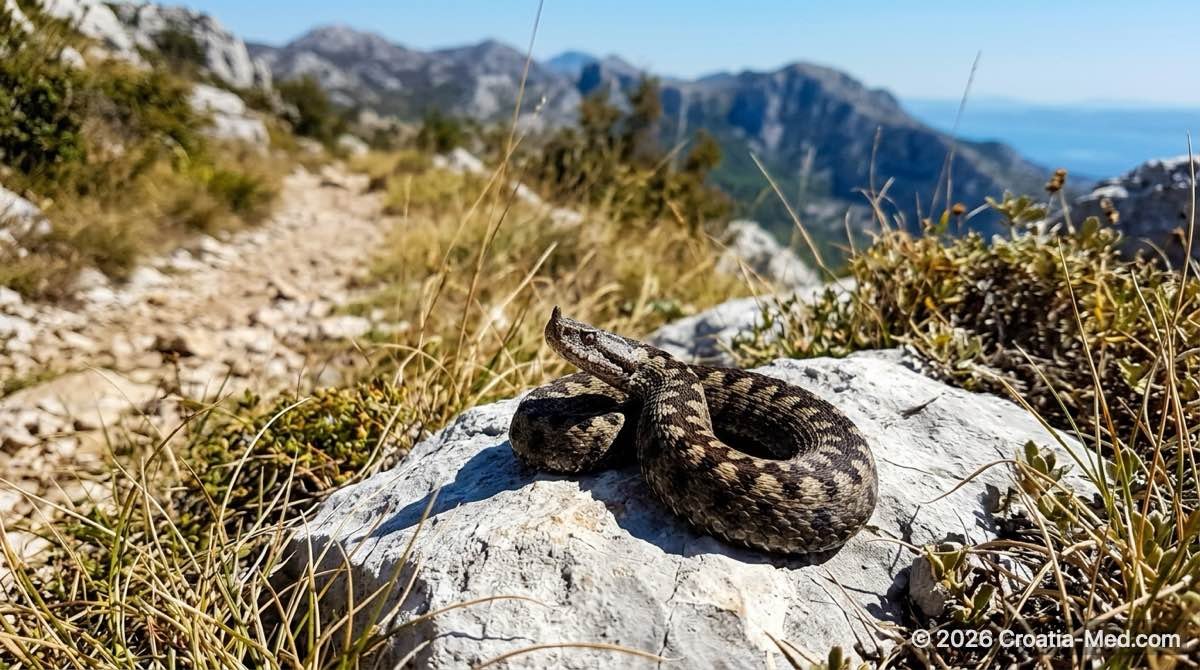
- Vipera ammodytes – the most dangerous and most relevant clinically
- Vipera berus
- Vipera ursinii (rare)Among these, Vipera ammodytes is responsible for the majority of clinically significant envenomations.
What happens after a snake bite?
Viper venom is primarily hemotoxic and cytotoxic, meaning it affects blood vessels and surrounding tissues.
After envenomation, several processes occur:
Increased vascular permeability – fluid leaks into tissues
Activation of inflammatory mediators
Possible disruption of coagulation pathways
The result is a combination of local tissue damage and systemic effects.
Local effects of Envenomation
The first symptoms usually appear at the site of the bite:
- Immediate pain
- Swelling (edema) that can spread
- Redness and warmth
- In some cases, blistering or necrosis
These changes are due to inflammation and direct toxic effects of the venom on tissues.
Systemic Symptoms of Envenomation
In moderate to severe cases, venom enters circulation and causes:
- Nausea and vomiting
- Dizziness or weakness
- Hypotension (low blood pressure)
- Coagulation abnormalities (bleeding tendency)
- In rare but serious situations:
- Shock
- Organ dysfunction
What to do after a snake bite
Immediate first aid is crucial:
- Stay calm and limit movement
- Immobilize the affected limb
- Remove rings, watches, or tight clothing
- Seek medical help immediately
Avoid:
- Cutting the wound
- Attempting to suck out venom
- Applying a tourniquet
Medical treatment
In a hospital setting, management may include:
- Monitoring vital signs
- Intravenous fluids
- Pain control
- Laboratory monitoring (especially coagulation)
- Administration of antivenom in indicated cases
Snake bites in Croatia are uncommon but medically significant. Viper venom primarily affects blood vessels and tissues, leading to local inflammation and, in some cases, systemic complications. Prompt recognition and appropriate medical care are key to a good outcome.
Emergency Contacts in Croatia:
Emergency Contact for Snake Bites in Croatia
!IMPORTANT:
Disclaimer: This information is for educational purposes only and does not replace professional medical advice. In the event of a snake bite, it is a critical emergency: contact emergency services (112 or 194) immediately.
References:
*Acta Clin Croat. 2022
*sciencedirect

Verified by: DR. Dr. med. Wilson Allakaj — Physician — Emergency medicine (Umag), Verified on May 16, 2026